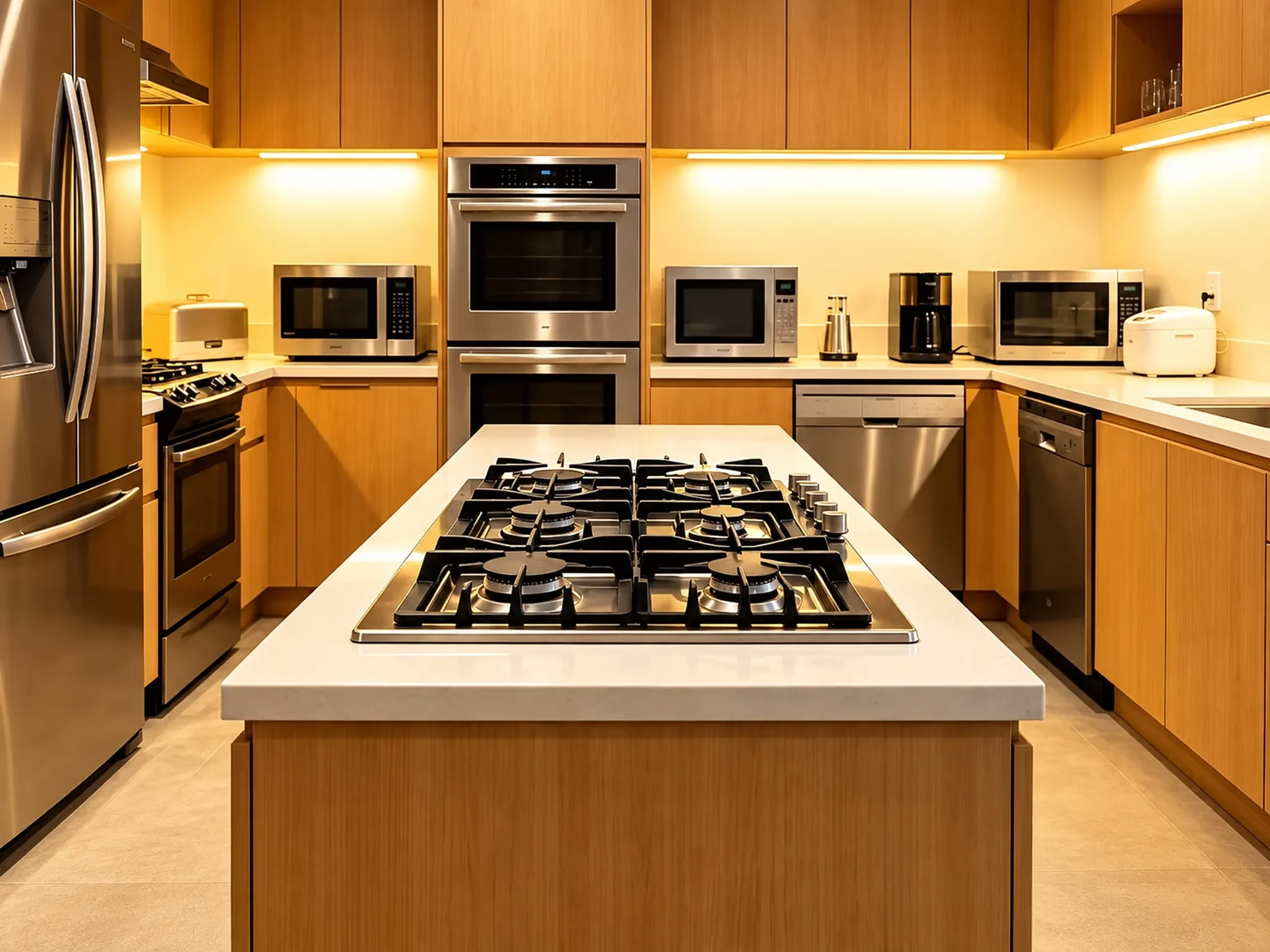
Gas Stove
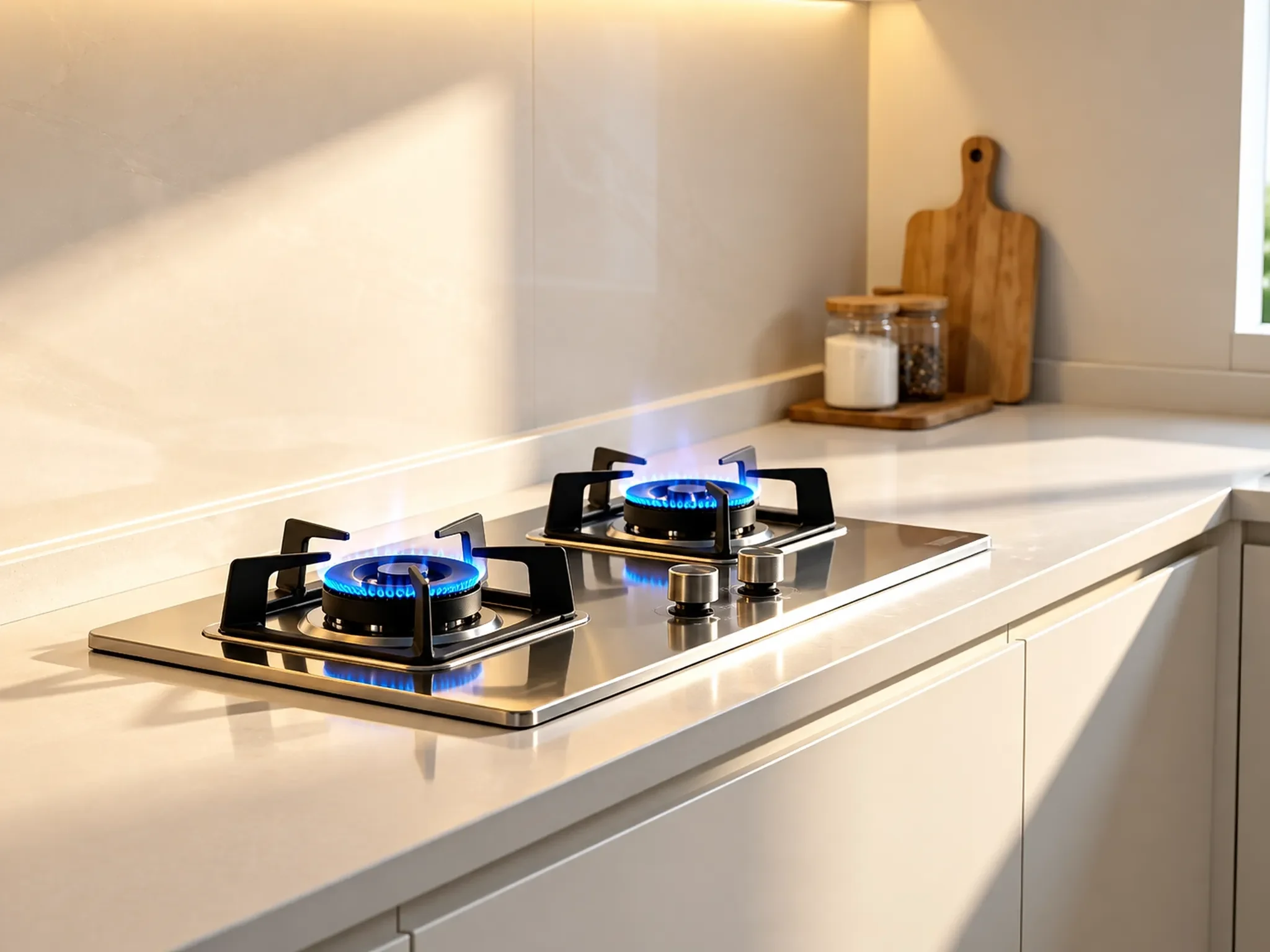
Built-in and tabletop gas stoves serve different installation needs and buyer channels. A built-in hob is designed to fit into a suitably prepared countertop, while a tabletop stove is a freestanding appliance placed on an appropriate surface. For importers, the choice affects more than appearance: retail positioning, installation information, packing configurations and country-specific gas requirements all need review. The better option is the one that matches the customer’s kitchen, distribution channel and local requirements—not automatically the model with more burners or a more premium finish.
Start with the installation format
Built-in gas hobs
A built-in gas hob is integrated into a kitchen countertop. This makes it especially relevant to fitted kitchens, appliance showrooms and planned kitchen renovations. Product selection normally involves more coordination with kitchen designs: countertop cut-out dimensions, installation clearances, ventilation, worktop compatibility and the intended gas supply must all be verified against the selected model's official technical instructions.
A buyer sourcing built-in units should collect installation drawings and model-specific specifications before promoting a universal fit. The exterior width alone does not establish the correct cut-out size. You can start with Lichef's single-burner built-in hobs or double-burner built-in hobs to compare available formats.
Tabletop gas stoves
Tabletop stoves are freestanding. Their portability of placement—subject to the applicable instructions and safe-use conditions—can appeal to buyers looking for straightforward household cooking equipment or particular commercial setups. Product comparisons should check the actual surface dimensions, stability, pot support design, finish, controls and use environment.
A tabletop model should not be described as universally suitable for indoor or outdoor use; the permitted installation and ventilation conditions depend on its verified specifications and local requirements. Explore Lichef's single-burner tabletop range and double-burner tabletop range as reference collections.
Compare the formats before choosing a catalog mix
| Buying consideration | Built-in gas hob | Tabletop gas stove |
|---|---|---|
| Installation | Requires compatible prepared worktop | Freestanding placement per product instructions |
| Typical customer journey | Kitchen planning, fitting or remodeling | Appliance replacement and standalone appliance sales |
| Technical information | Cut-out and installation clearances are especially important | Appliance footprint, placement and connection need review |
| Merchandising | Often grouped with fitted-kitchen equipment | Often grouped by burner count and stove format |
| OEM discussion | Appearance, markings, packaging and fit documentation | Appearance, body construction and packaging choices |
This table is a sourcing framework, not a specification for every model. Compare actual model documentation before deciding which points apply.
Consider burner count separately from installation
One burner does not automatically mean a small retail segment, and two burners do not automatically imply household-only use. What matters is the model design, intended environment, pan support, fuel configuration and available technical documentation. A single-burner built-in hob may be chosen where the installation is constrained; a tabletop double-burner may suit a distributor building a broader household assortment. Both decisions need market research and supplier confirmation.
Plan your range around buyers, not just photos
A practical product assortment might include a focused entry-level unit, a two-burner mainstream option and one distinctive style for retailers that sell by appearance. This is a proposed range-building method, not a claim about demand in any particular market. Use your own sales data, retailer feedback and local channel requirements to choose the balance.
Confirm the market and gas requirements first
Gas appliances must be compatible with the intended fuel, supply pressure, fittings and destination-market requirements. Avoid ordering a visually attractive model and assuming it can later be converted to another gas type. A manufacturer must confirm whether a particular configuration is offered and what documentation accompanies it. Gas installation or adjustments should be performed only by qualified personnel in accordance with local rules and the appliance instructions.
For every shortlisted model, request written confirmation of the designated gas family, pressure, installation requirements, product identification markings and any evidence necessary for the target market. The exact requirements differ by country and product type.
A useful importer shortlist
- Identify the buyer channel: kitchen showroom, household retailer, distributor or trade buyer.
- Choose the installation type before choosing a decorative finish.
- Shortlist specific model numbers and request dimensioned drawings.
- Confirm burner arrangement, surface material and supporting components.
- Check the designated gas configuration and local conformity requirements.
- Review master carton details, individual packing and labeling possibilities.
- Ask for an OEM discussion only after the base model is reasonably clear.
When to discuss OEM or private label
OEM programs work best when the base product is selected first. A buyer can then discuss the available branding position, packaging structure, user instructions and market-specific markings. Not every variant necessarily supports the same changes. See how Lichef approaches OEM gas stove cooperation and contact the team with the selected models, destination and anticipated quantity.
Frequently asked questions
Is a tabletop stove always easier to import?
Not necessarily. Both formats require correct gas compatibility, instructions, labeling and applicable conformity review. Built-in models add installation-specific dimensions and requirements that buyers should verify early.
Can I choose both styles for one wholesale catalog?
Yes, if both are suitable for the intended market and customer channels. Keep model documentation separate so buyers receive the correct installation and gas information.
Should I decide on OEM packaging before selecting the stove?
It is more efficient to shortlist the stove first. Dimensions, component layout and target-market information influence what packaging and markings may be appropriate.
Discuss a model with Lichef.
Share the destination market, intended product type, model references and estimated quantity to start a concrete sourcing conversation.