Gas Stove
Tempered glass and stainless steel are two distinct ways to present a gas stove, but neither material alone defines the quality or suitability of the finished appliance. A wholesale buyer should compare the complete model: cooking surface, burner supports, controls, approved heat-related design, cleaning instructions, packing protection and designated gas conditions. Glass can deliver a polished visual presentation; stainless steel can communicate a utilitarian metal finish. The best choice is driven by the sales channel and verified construction, not by appearance alone.
What buyers usually mean by the two finishes
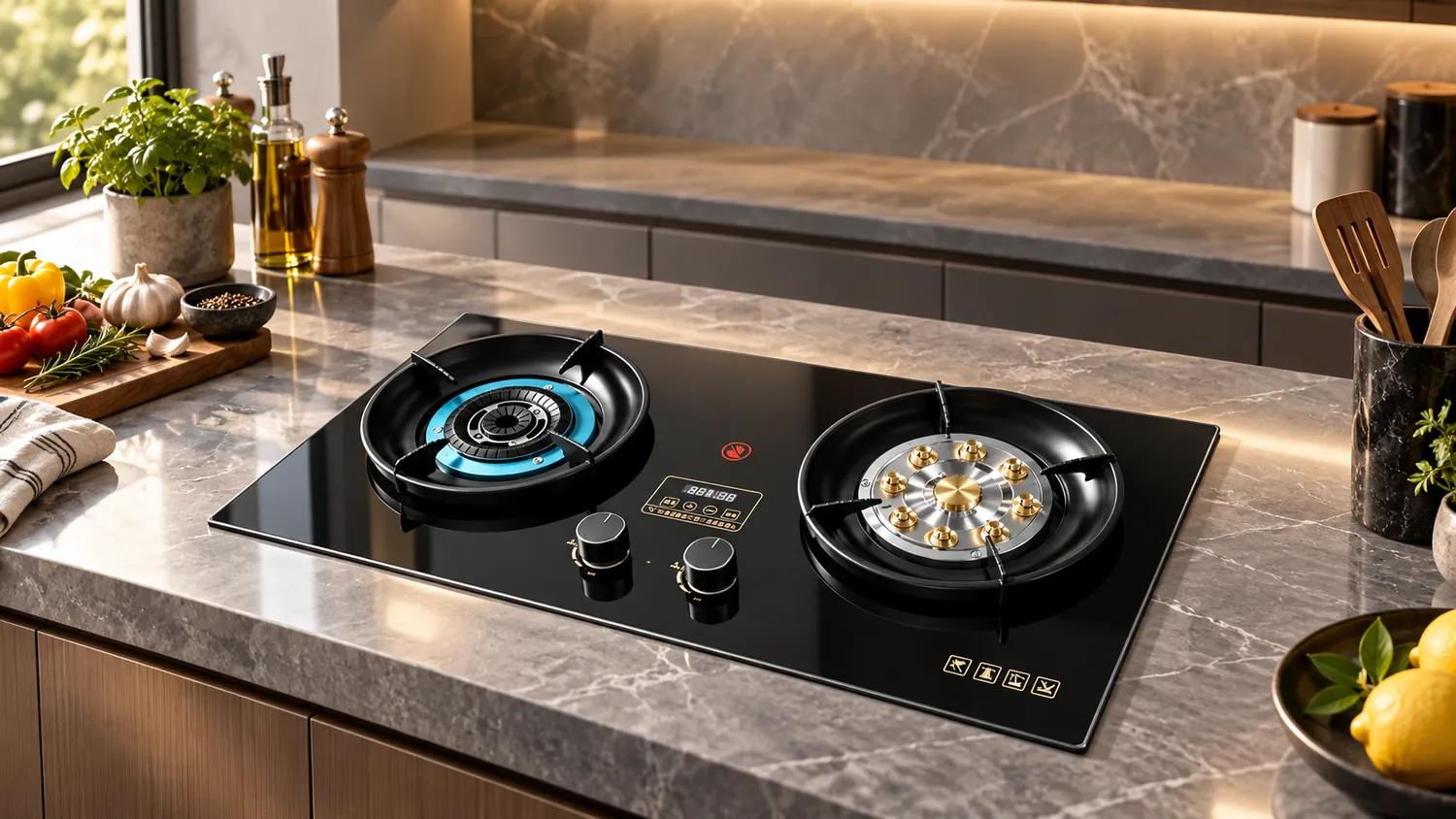
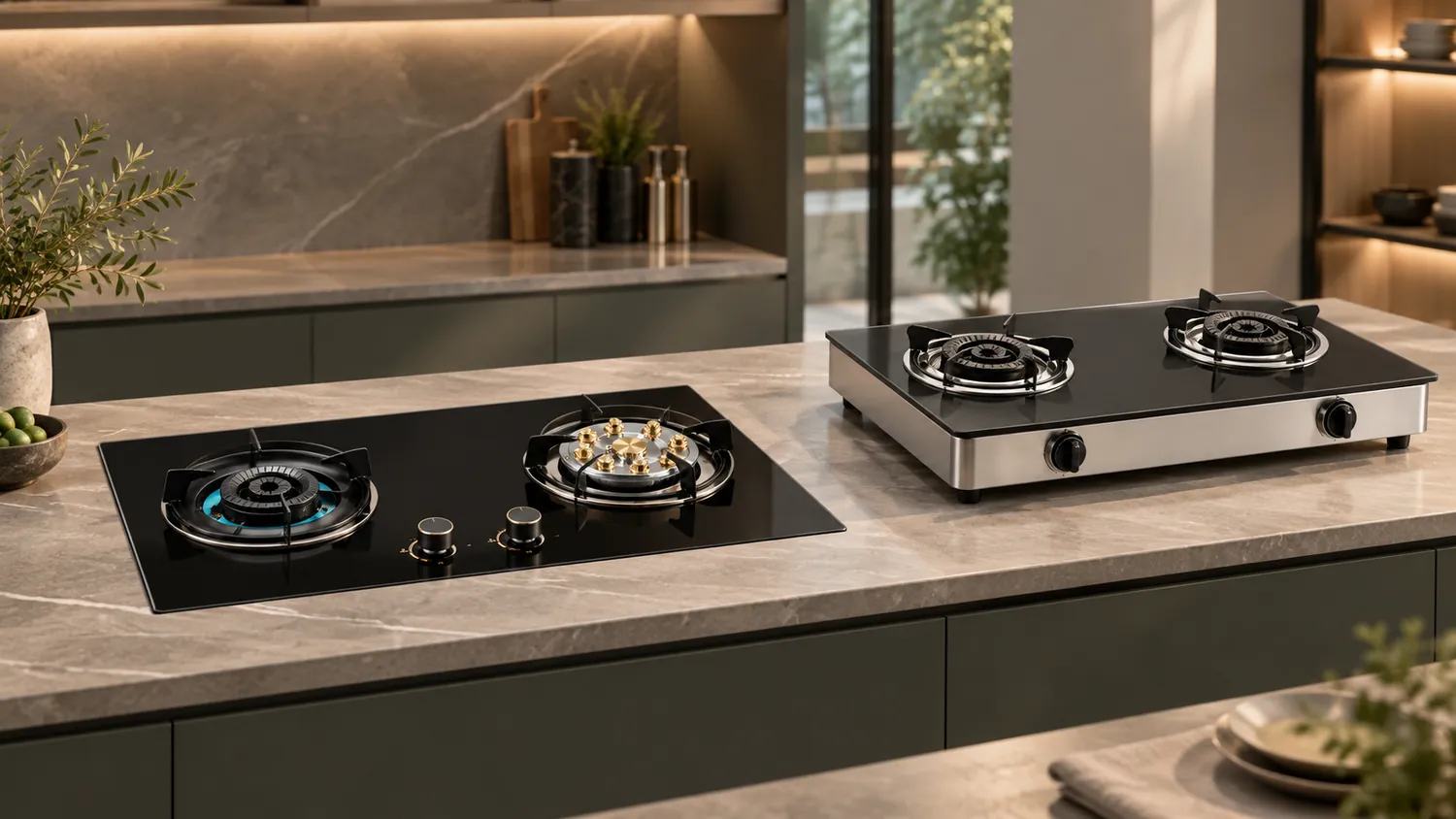
A glass-top gas stove uses a specially designed glass surface around the burner arrangement. Depending on the actual product, this may be a built-in hob or a tabletop unit. A stainless-steel or metal-body stove uses metal panels as prominent visible surfaces or body components. Models can combine materials, so the terms are convenient marketing categories, not complete technical specifications.
Lichef's tempered glass gas stove collection includes products grouped by the client's original catalog classification. For metal-body tabletop examples, review the tabletop double-burner collection. Compare exact models rather than assuming all stoves in a category have identical construction.
Visual style and retail positioning
Glass-surface stoves often appeal where a showroom emphasizes sleek appearance and visually integrated cooking equipment. Metal-body stoves can fit retail assortments focused on a straightforward, practical presentation. Both can be designed for a range of price segments; the material by itself is not proof of premium performance or value.
Ask retailers which presentation works better for their stores. Where possible, evaluate the appearance under typical showroom lighting, not only in a retouched product image. Buyers should also check whether protective films or shipping materials change how the surface looks upon arrival.
Cleaning and everyday care are product-specific
Glass and stainless surfaces have different visible fingerprints, marks and cleaning expectations. Actual ease of cleaning depends on surface finish, burner-component removal, seams, knobs, trivets and the manufacturer's maintenance instructions. Never advertise a gas stove as scratch-proof, shatter-proof or universally easy to clean without evidence for the specific product.
A useful demonstration is to examine how easily the model's permitted removable components can be accessed for routine cleaning. Do not recommend disassembly of gas-connected parts or unsafe modifications. The instructions supplied with the selected appliance govern acceptable maintenance.
Packaging, storage and transport
The surface material changes the product's packaging concerns. Glass components need appropriately designed protection against impacts and handling damage; metal surfaces may need measures against scuffing, deformation and finish marks. Neither issue can be judged from a category photo alone. Evaluate the actual packaging configuration and the packing tests or evidence available for the model and transport route.
For private-label orders, confirm that the selected carton and protective inserts suit the specific unit, including its pan supports and accessories. Any new packaging design should be approved before production. See Lichef's OEM cooperation overview for the practical information to prepare.
Material comparison for buyers
| Evaluation point | Glass-top design | Stainless-steel / metal-body design |
|---|---|---|
| Visual character | Glossy, reflective presentation | Metallic, practical presentation |
| Merchandising question | How will the glass finish appear on display? | How will the brushed or polished finish appear? |
| Handling consideration | Verify protection of glass during packing | Verify protection against scratches or dents |
| Cleaning assessment | Follow model-specific glass cleaning instructions | Follow model-specific metal finish instructions |
| Technical suitability | Must be confirmed for the exact model | Must be confirmed for the exact model |
These are comparison prompts, not material-performance guarantees.
Do not let the finish obscure functional selection
Even when surface design drives retail interest, the buyer must still review burner count, pan support, control arrangement, installation dimensions, gas type, pressure compatibility and applicable safety documentation. A glass built-in hob and a steel tabletop unit cannot be compared only by top-surface material because their intended installation differs too.
Use the built-in stove range and the tabletop stove range to establish the right format first. Then compare finishes among appropriate models.
A shortlist for wholesale and OEM teams
- Select an installation format compatible with the intended market.
- Record each exact model code and corresponding images.
- Verify the actual surface and body materials through supplier specifications.
- Review approved cleaning and maintenance guidance.
- Confirm packaging requirements and how fragile or finished parts are protected.
- Ask which labeling or visual options are actually available for your OEM program.
- Confirm gas compatibility and any documents needed for the destination.
Frequently asked questions
Is tempered glass always a better choice than stainless steel?
No. Visual expectations, model engineering, handling and market suitability all matter. Neither surface material automatically makes the complete stove superior.
Are all glass-top stoves built-in?
No. Glass-finish products may appear in built-in or tabletop categories. Refer to the exact installation instructions for the chosen model.
Can the surface color be changed for an OEM order?
Availability varies by model and requested finish. Ask the manufacturer to confirm feasibility and any impact on documents or production planning.
Discuss a model with Lichef.
Share the destination market, intended product type, model references and estimated quantity to start a concrete sourcing conversation.